Feeling lonely at night when the world goes quiet? Learn why nighttime loneliness hits harder, what it does to your mind and body, and simple ways to feel calmer, sleep better, and find real connection—even at 2 a.m.
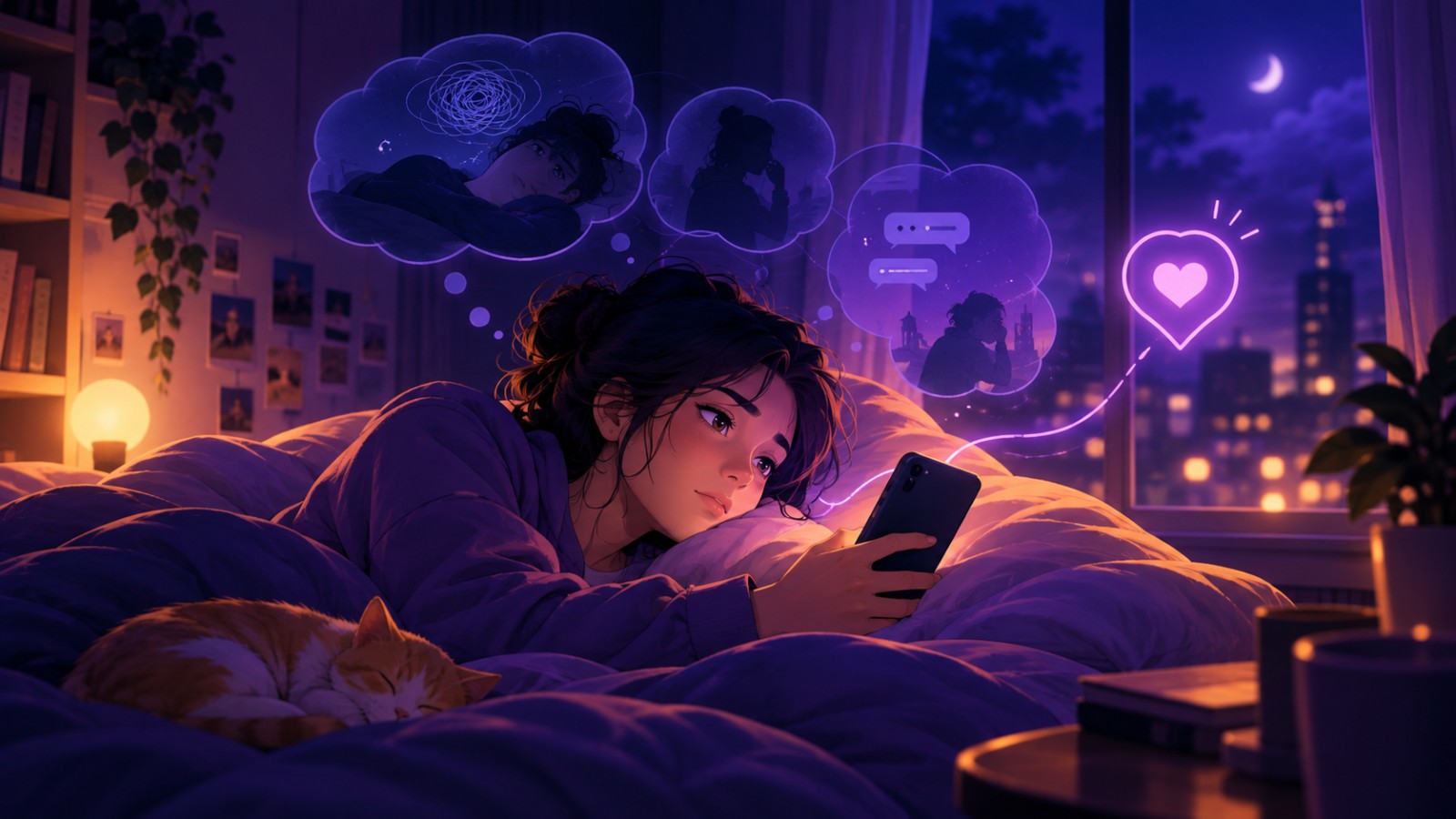
It's late. The messages have stopped coming. The house is quiet, the notifications have gone still, and everyone you know is asleep. And that's when it hits you—a heavy, aching kind of loneliness that seems to appear out of nowhere the moment the world goes dark.
If you feel most alone at night, you're not imagining it and you're not broken. Nighttime loneliness is one of the most common and least talked about experiences there is. The good news: once you understand why it happens, it becomes far easier to soften. Let's talk about what's really going on—and what actually helps.
Why Loneliness Always Feels Worse at Night
During the day, you're distracted. Work, errands, messages, noise—there's enough happening to keep your mind occupied. At night, all of that falls away, and you're left alone with your own thoughts. There's nothing left to drown them out.
This isn't a coincidence. It's how your brain and body are wired. When the day quiets down, the mental "busyness" that kept difficult feelings at bay disappears, and everything you were too busy to feel during the day finally catches up with you.
The Real Reasons Nighttime Hits Harder
There are a few specific things happening after dark that make loneliness feel so much more intense:
- The distractions are gone. All the tasks and noise that kept your mind occupied have stopped, so there's nothing standing between you and your feelings.
- Everyone else is unavailable. Texting a friend at 2 a.m. feels like an imposition, so you stay silent—even when you most need someone to talk to.
- Your body is tired, so your defenses are down. Exhaustion makes emotions bigger. The same worry that felt manageable at noon can feel overwhelming at midnight.
- The quiet amplifies everything. Silence has a way of making thoughts louder. Regret, worry, and longing all get more airtime when there's nothing else to focus on.
- Night is when we reflect. Lying in the dark, your mind naturally replays the day, the year, the relationships you wish were different. It's the body's built-in review time—and it isn't always gentle.
What Nighttime Loneliness Actually Feels Like
Loneliness at night rarely announces itself clearly. It shows up in quieter, sneakier ways:
- Scrolling endlessly through your phone, hoping something—anything—will fill the gap.
- Wanting to text someone but feeling like you have no one you can reach out to without a "reason."
- A tight, hollow feeling in your chest that you can't quite name.
- Replaying conversations or memories and wishing things were different.
- Lying awake, mind racing, unable to switch off—even though you're exhausted.
If any of this feels familiar, take a breath. This is an incredibly human experience, and recognizing it is the first step toward changing it.
Why This Matters More Than People Realize
Nighttime loneliness isn't just an uncomfortable feeling—it can quietly shape your health. When loneliness keeps you awake, it disrupts your sleep, and poor sleep makes the next day's emotions even harder to handle. It becomes a loop: lonely nights lead to tired days, which lead to lonelier nights.
Your body treats chronic loneliness as a kind of stress. Over time, that steady low-level stress can affect your mood, your focus, and even your physical health. This isn't weakness or neediness—it's biology. Humans are wired for connection, and going without it registers as a real need, not a character flaw.
What Actually Helps When You Feel Lonely at Night
The goal here isn't to force yourself to "just stop feeling lonely." It's to gently give your mind and body what they're asking for. Here's what genuinely helps:
1. Name the Feeling Instead of Fighting It
When loneliness rises, try quietly acknowledging it: "I'm feeling lonely right now, and that's okay." It sounds small, but naming an emotion takes away a surprising amount of its power. You stop fighting the feeling and start relating to it, which almost always makes it lighter.
2. Get Off the Endless Scroll
Late-night scrolling feels like connection, but it usually makes loneliness worse. Watching curated highlights of other people's lives while you sit alone in the dark is a recipe for feeling more isolated. If you notice yourself scrolling to fill the emptiness, gently put the phone down and try something that actually soothes you instead.
3. Create a Calming Wind-Down Ritual
Give your nervous system signals that it's safe to relax. A warm drink, dim lights, a few minutes of slow breathing, a familiar playlist, or a book can shift your body out of "alert" mode. Rituals work because they're predictable, and predictability feels safe.
4. Write It Down
If your mind is racing, get the thoughts out of your head and onto paper (or a notes app). You don't need to solve anything—just emptying the noise onto a page can quiet the mental spin enough to let you rest.
5. Reach Out—Even to a Stranger
Sometimes what you really need isn't advice or a solution. It's simply to feel heard by another human being. The problem is that at night, the people you know are asleep, and reaching out can feel like a burden.
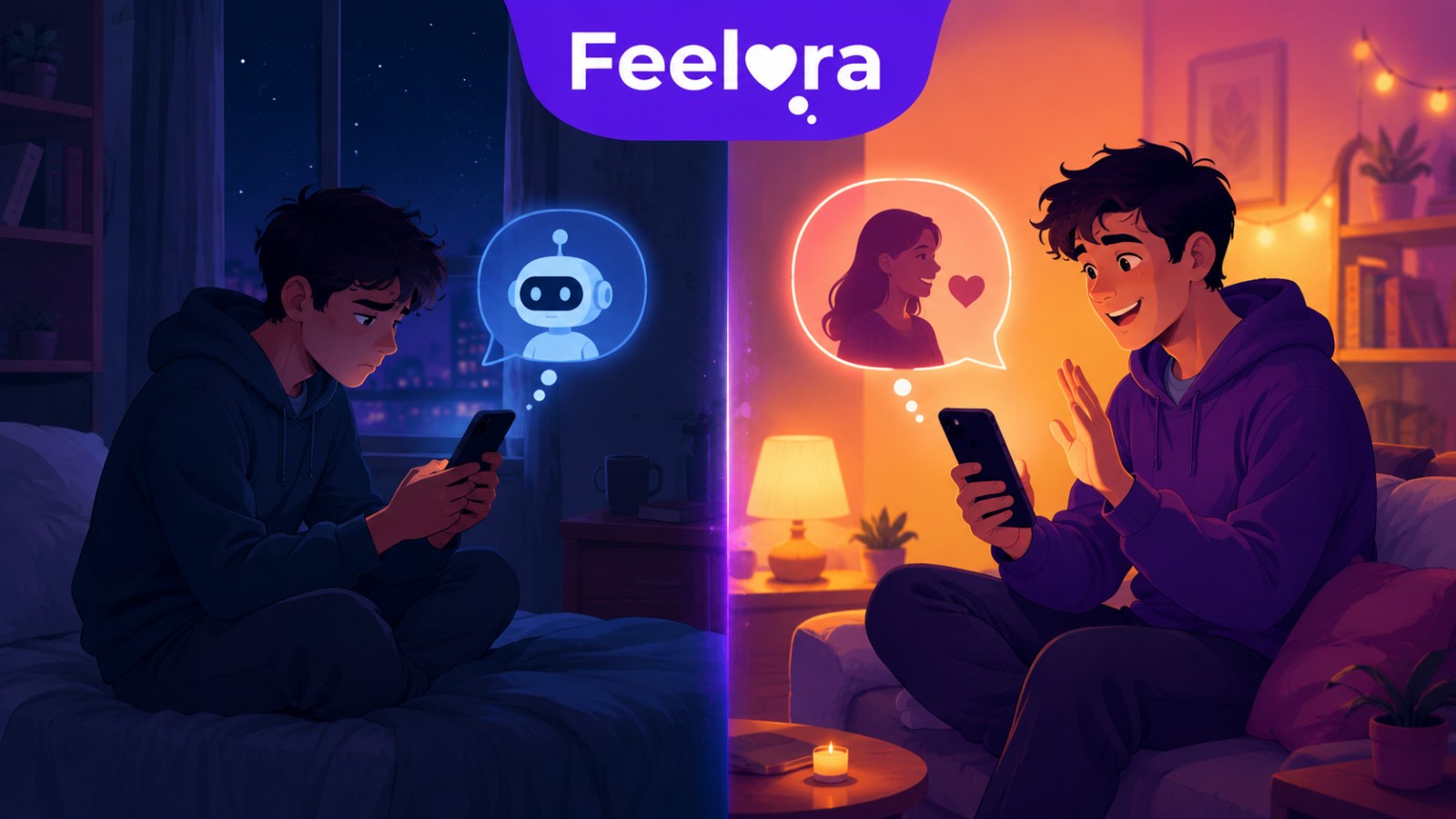
This is exactly why having access to someone who's available and ready to listen—without judgment, without history, without you having to explain your whole life first—can be so powerful. A single honest conversation where someone actually listens can dissolve that 2 a.m. heaviness faster than almost anything else.
Why Talking to a Verified Listener Can Help at Night
There's something uniquely freeing about talking to someone who has no expectations of you. A verified listener isn't there to fix you, judge you, or remind you of who you're "supposed" to be. They're simply there to hear you.
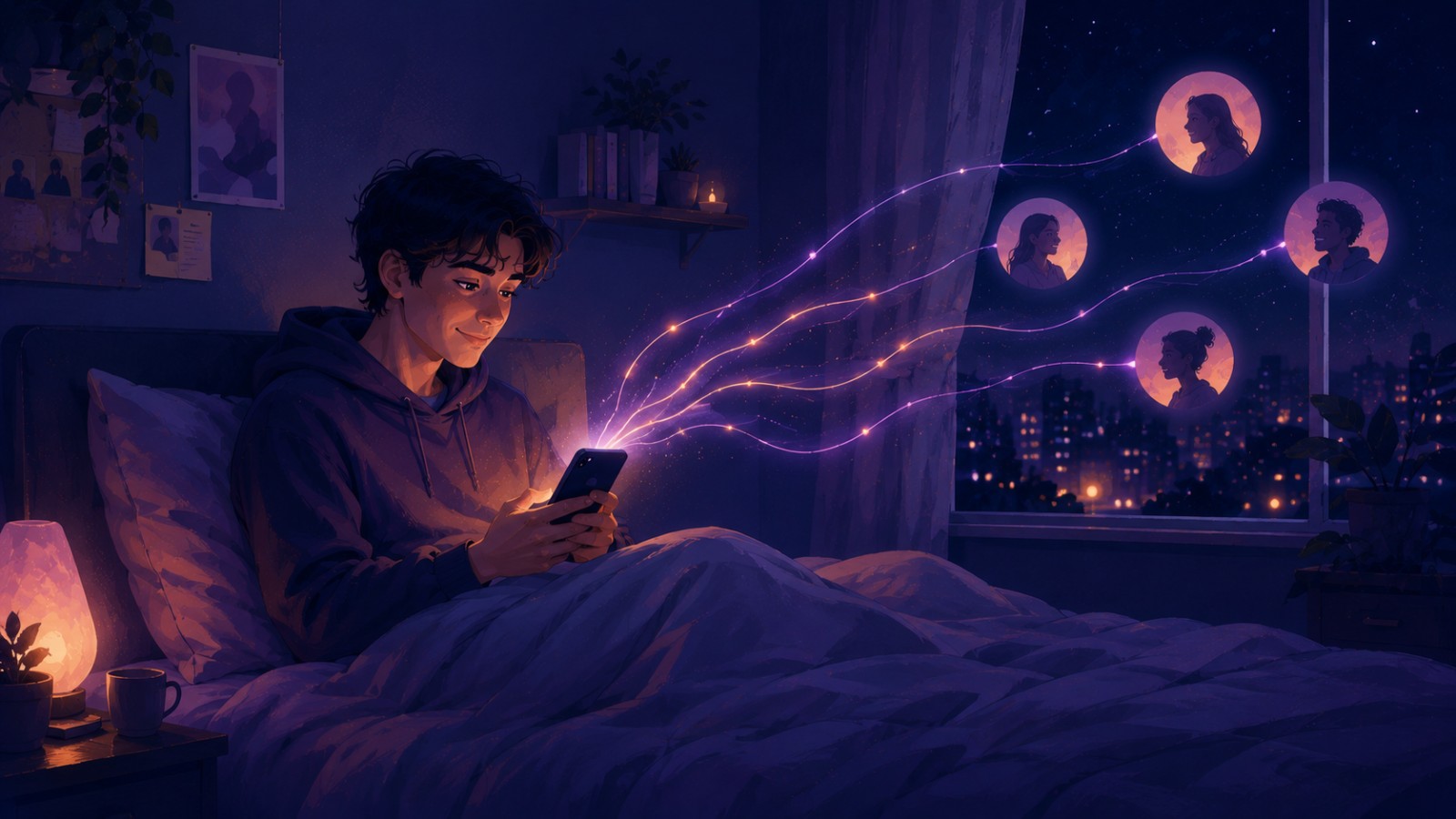
At night, when the people in your life are unavailable, having a safe, anonymous space to talk means you don't have to sit alone with your thoughts. You can say the thing you've been holding in all day. You can be completely honest without worrying about how it lands. And often, that's all it takes to feel human again—one conversation where you're truly seen.
On Feelora, you can talk to verified listeners anytime, including in the middle of the night when loneliness tends to peak. No pressure, no judgment—just a real person ready to listen whenever you need it.
The Most Important Thing to Remember
Feeling lonely at night doesn't mean something is wrong with you. It means you're a human being with a real need for connection—and that need doesn't clock out just because the sun went down.
Be gentle with yourself in those quiet hours. The heaviness you feel at midnight is not the whole truth about your life; it's just what loneliness looks like when the distractions fall away. Morning comes. Connection is possible. And you never have to sit alone with it if you don't want to.
Frequently Asked Questions
Feelora Team
Contributing Author
Need Someone to Talk To?
Connect with verified listeners on Feelora for anonymous, judgment-free emotional support.
Get Started