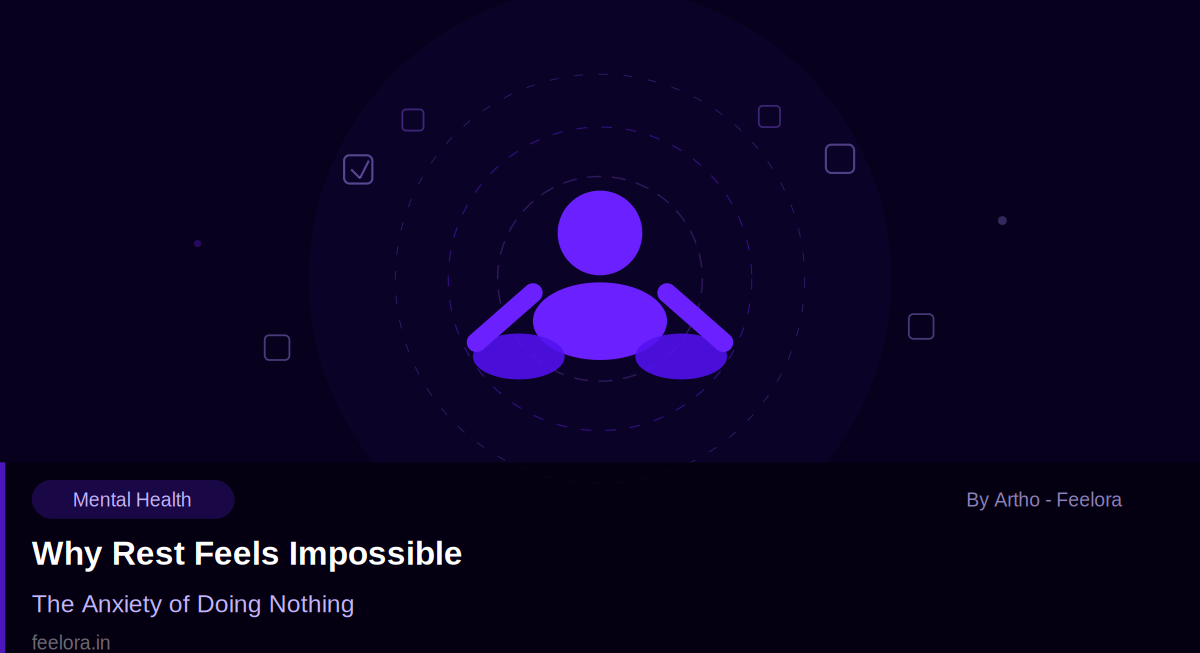
You finally have a free afternoon. Nothing to do. And within minutes you feel restless, guilty, or like you are wasting time. Artho from Feelora on why your nervous system treats rest as a threat.
You finally have a free afternoon. Nothing scheduled, nothing due, nobody needing anything from you. And within about ten minutes you feel restless, vaguely guilty, slightly anxious — and start looking for something to do.
Rest should be the reward. But for a lot of people, it functions more like a punishment. The moment there is nothing to occupy you, something rushes in: a sense that you should be productive, that you are wasting time, that you cannot quite justify the stillness.
Artho from the Feelora team found this to be remarkably common — and that most people who have it have never paused to wonder what it means.
Why your nervous system treats rest as a threat
For many people living with chronic busyness or anxiety, the nervous system spends so long in an activated state that stillness starts to feel wrong. Activity becomes a kind of regulation — as long as you are doing something, you are managing. The moment you stop, the system does not know what to do with the quiet. Without the structure of tasks, there is nothing preventing whatever has been held at bay from surfacing.
This is sometimes called high-functioning anxiety: the anxiety is managed through constant productivity, so productivity itself becomes necessary. Rest is not restful when the mind has been conditioned to treat stillness as a danger signal.
The productivity guilt trap
There is also a cultural layer on top. Many people have internalised a value system that equates worth with output. In this system, rest is not earned until everything is done — and everything is never done. The free afternoon feels like cheating. Waiting until you deserve to stop means you wait until you collapse.
What is actually underneath the restlessness
One thing that rest allows is feeling. When you are busy, there is limited space for whatever emotional content is waiting. Grief, anxiety, loneliness, dissatisfaction — these stay quiet when there is enough noise and demand. Stillness creates space for them to arrive. If rest feels uncomfortable, it is worth asking what it gives space for.
What actually helps
Learning to rest is, for many people, genuinely a skill that requires practice. Start small and specific: five minutes of doing nothing, building to longer periods. Notice what arrives without immediately acting on it. Reframe rest as an input rather than a reward — you do not rest because you have earned it, you rest because rest is what makes the rest possible.
At Feelora, Artho and the team work with people for whom productivity has become the only acceptable form of existence. Helping them find value in stillness is often one of the most significant things they work on.
Frequently Asked Questions
Feelora Team
Contributing Author
Need Someone to Talk To?
Connect with verified listeners on Feelora for anonymous, judgment-free emotional support.
Get Started