Feeling lonely even when surrounded by people? Learn why modern loneliness happens, what chronic isolation feels like, and how to build genuine connection with verified listeners for real emotional support.
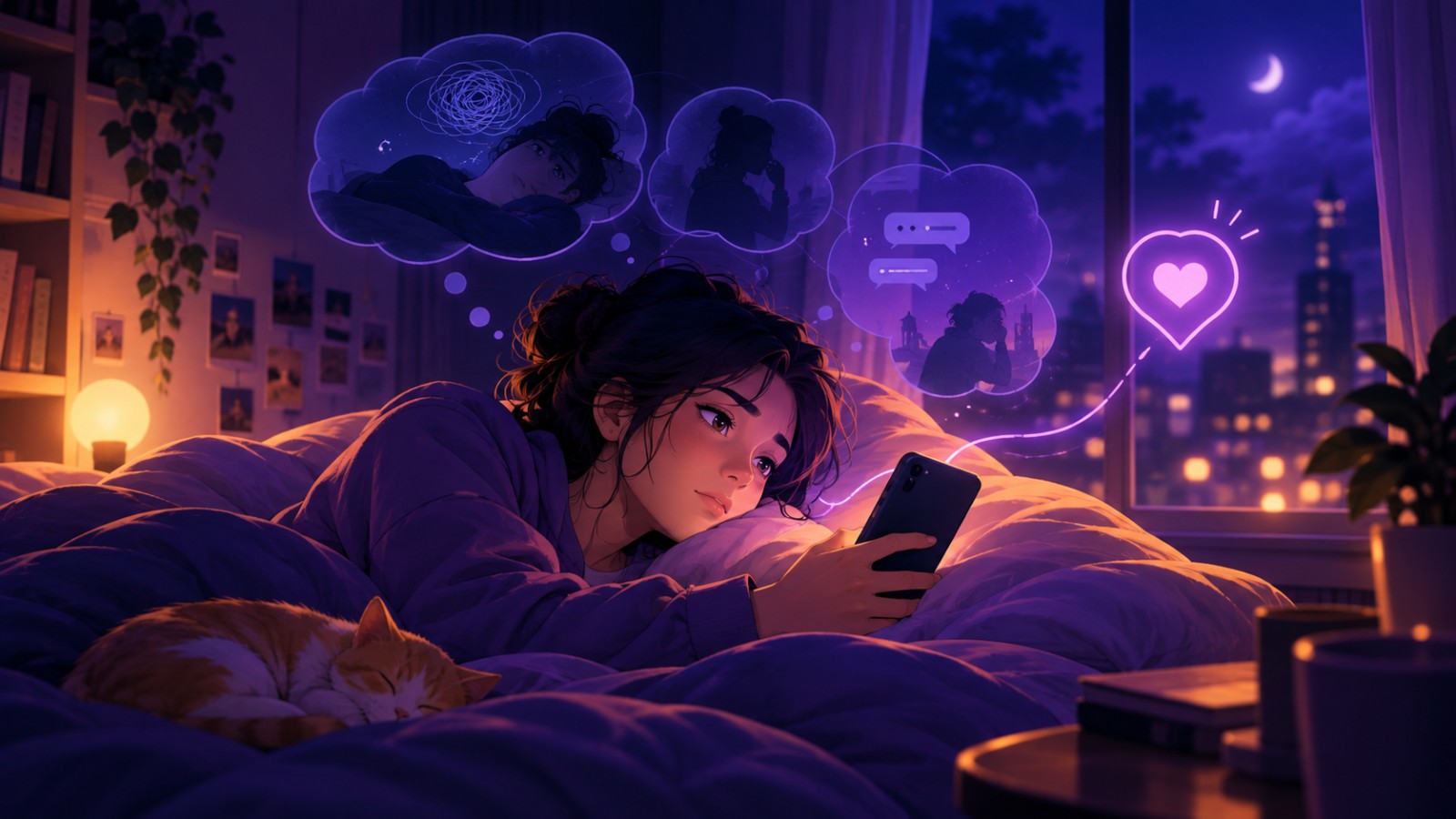
You're scrolling through your phone at midnight, watching your friends laugh in a group chat. You've been added to the conversation for months. Hundreds of followers, dozens of "friends," yet somehow you feel like the only person in the world who truly understands how empty it all feels.
You're not alone in this feeling—ironically, that's the problem. Most people feel this way now, and nobody talks about it. We've built a world where we're more connected than ever and more lonely than ever. Connection has become a performance, not a sanctuary.
Why Modern Loneliness Hits Different: You Can Be Surrounded and Still Feel Completely Alone
Loneliness isn't about being by yourself. It's about the gap between the connection you need and the connection you actually have. And that gap is wider now than it's ever been.
There's a specific type of loneliness that comes from being surrounded by people who don't really see you. You laugh at the right moments. You say the right things. But underneath, nobody knows that you cry in your car on the way home, or that you haven't felt genuinely understood since you were thirteen, or that the person next to you at work has no idea what actually keeps you awake at night.
This isn't a flaw in you. This is a flaw in how we've learned to connect. We've traded depth for breadth. We've chosen performance over vulnerability. And our nervous systems—built for small groups and real conversation—are starving.
The Loneliness Paradox: Why Having More Connections Makes Loneliness Worse
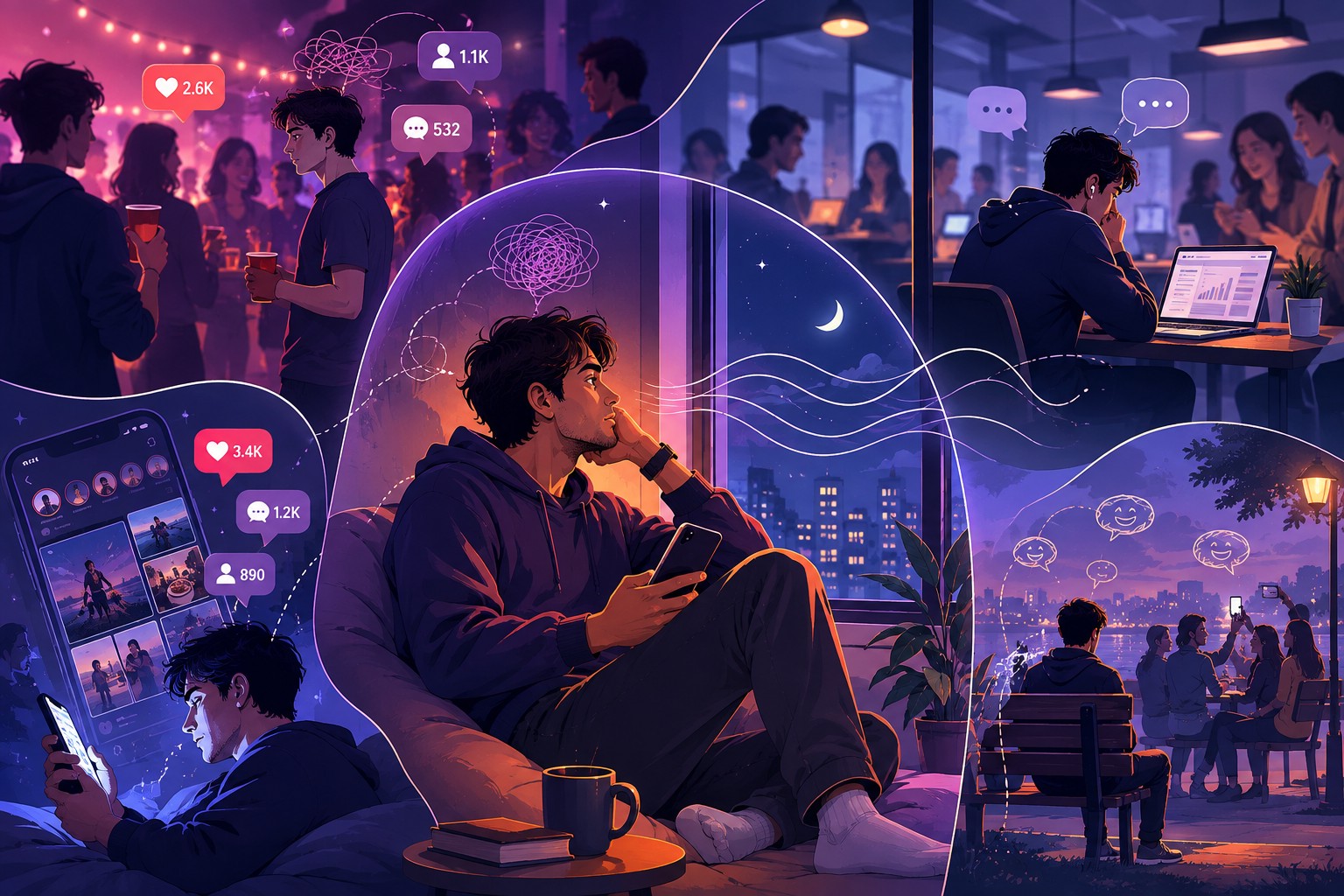
You might have 500 followers, but how many of them know you're struggling? How many would notice if you disappeared? The research is brutal here: increases in social media use correlate directly with increases in depression and loneliness. More connection on paper, less connection in practice.
This happens because online connection activates different parts of our brain than face-to-face interaction. We feel seen, but we're not really exposed. We're curated. We're performing. And performing is exhausting when nobody ever gets the raw version of you.
Loneliness often gets confused with solitude, but they're almost opposites. You can be alone and feel completely at peace. You can be surrounded and feel completely unseen. The difference is whether someone truly understands you—or whether you're just occupying the same space.
What Modern Loneliness Actually Looks Like: The Uncomfortable Signs
Loneliness doesn't always announce itself loudly. It shows up as:
The exhaustion of explaining yourself. You've stopped trying to tell people how you actually feel because you're tired of being misunderstood. It's easier to just nod and agree. Easier to be less, so nobody gets disappointed.
Feeling like a supporting character in everyone else's life. You show up for people's celebrations and crises, but nobody really shows up for you. Not because they're bad people, but because you've never told them you need it.
The specific panic of being forgotten. You're haunted by a low-level dread that if you stopped reaching out, nobody would check in. Not because it's true, but because you don't know if it's true, and that uncertainty is its own kind of pain.
Feeling profoundly misunderstood even by your closest people. Your family gets some of you. Your friends get other parts. But nobody gets the whole picture, so nobody really gets you.
Laughing along while feeling completely invisible. You're in the group, but you're not in the group. It's a specific, quiet isolation that happens while surrounded by laughter.
The Body's Loneliness Response: Why This Actually Matters for Your Health
Your body doesn't know the difference between loneliness and genuine danger. When you feel chronically misunderstood and unseen, your nervous system treats it like a threat. Cortisol rises. Inflammation increases. Your immune system weakens. Studies show that chronic loneliness is as damaging to your health as smoking fifteen cigarettes a day.
This isn't weakness. This isn't neediness. This is biology. Humans aren't designed to feel unseen—we're designed to belong. When we don't, our bodies start to break down.
Why It Feels Harder to Find Real Connection: The Modern Loneliness Trap
Real connection requires vulnerability. Vulnerability requires safety. And safety is rare now because everyone is performing, and nobody wants to be the first to stop.
We've created a system where:
Everyone is curating their image instead of sharing their reality. You don't know if anyone else is struggling because nobody admits it publicly. So you assume you're the only one. So you hide it further. It's a cycle that gets lonelier with every rotation.
We're expected to perform being okay at all times—in work meetings, on social media, at family dinners. This constant performance is actually one of the biggest causes of isolation. You can't be close to someone while you're busy performing for them.
Casual friendships have replaced intimate ones. You have acquaintances everywhere and confidants nowhere. The people you see most often know you the least.
The Kind of Connection That Actually Works: What Real Understanding Looks Like
This is where hope lives: real connection still exists, and it's not complicated. It just requires one thing: someone listening without judgment.
You don't need everyone to understand you. You need one person—sometimes even a stranger—who gets it. Someone who doesn't try to fix you or minimize your experience. Someone who hears the thing you're afraid to say and doesn't look away.
That kind of space is rare, which is exactly why it's so powerful. When someone lets you be completely honest without judgment, something in your nervous system settles. You stop performing. You stop protecting. You just exist, and that's enough.
This is actually why anonymous conversation can be so healing. Without the weight of history or expectation, you can be completely honest. You can say the thing you'd never tell your actual friends. And often, that honesty is the first step toward feeling less alone.
How to Start Building Real Connection (When You're Tired of Performing)
Stop waiting to be understood perfectly before you're honest. It won't happen. Partial understanding from someone who's genuinely trying is infinitely better than perfect performance for people who aren't listening.
Find spaces where vulnerability is the default, not the risk. Anonymous listening communities, therapy, online support groups—places where the whole point is to be real. You don't have to earn the right to be authentic there.
Look for people who ask follow-up questions. Real listeners don't just wait for their turn to talk. They want to understand. They remember the thing you mentioned last week. These people are rare. Notice when you find them.
Be honest about your loneliness, even when it's uncomfortable. "I feel like nobody really knows me" is one of the most human things you can say. When you say it, watch how many other people nod in recognition. You're not as alone as loneliness makes you feel.
Build small rituals of real connection. It doesn't have to be massive. One genuine conversation a week where you're not performing can be enough to shift your entire nervous system from threat mode to safety mode.
Why Anonymous Conversation Isn't a Band-Aid—It's Actually Important
Some people worry that talking to strangers online is less "real" than talking to friends. But here's what research actually shows: sometimes the most healing conversations happen when there's no history, no judgment, and no stakes. When you can just be honest.
The goal isn't to replace your real relationships. It's to create a space where you can practice being real, think out loud, and feel understood while you're building deeper connections elsewhere. Sometimes talking to a stranger who truly listens is the reset your nervous system needs to feel less alone everywhere else.
The Most Important Thing to Know: Loneliness Doesn't Mean Something Is Wrong with You
The culture tells you that loneliness is a personal failure—that you should be more outgoing, less needy, more likeable. That's a lie designed to make you stop asking for connection.
Loneliness in the modern world is normal. It's structural. We've built a world that makes real connection harder and performs easier. The fact that you feel lonely means you still remember what real connection feels like. That's not weakness. That's wisdom.
You're not broken. You're not too much or not enough. You're just human, in a time when being human—really, actually human—is harder than it's ever been. And that's something worth acknowledging, out loud, without shame.
Frequently Asked Questions
Feelora Team
Contributing Author
Need Someone to Talk To?
Connect with verified listeners on Feelora for anonymous, judgment-free emotional support.
Get Started