The exhausting loop of seeking approval from people who might never give it. Artho from Feelora explores where the need to prove yourself really comes from — and what it takes to finally stop.
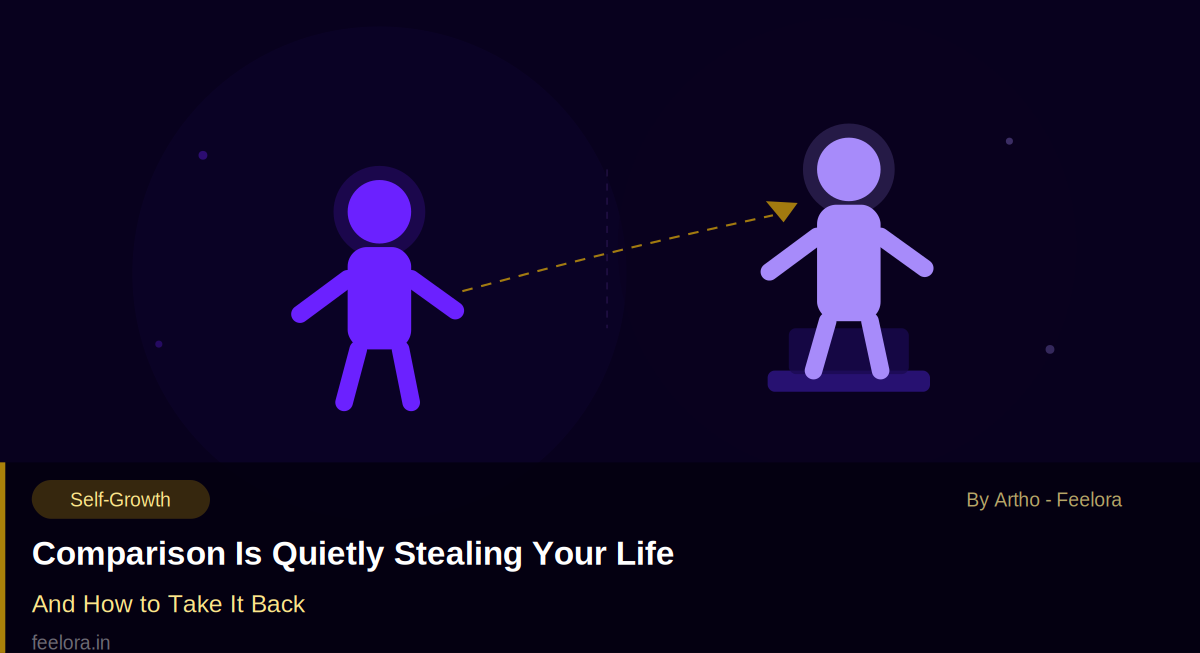
You aced the presentation. You got the promotion. And still — somewhere in the back of your mind — you were watching to see if a particular person noticed. And when they didn't respond the way you needed them to, the achievement felt somehow incomplete.
This is the approval trap. And most of us walk into it regularly, often without realising we're doing it.
Artho from the Feelora team has spoken to many people carrying a quiet, relentless need to prove themselves — often to parents, managers, or partners whose approval has always felt slightly out of reach. Here's what's actually going on, and what helps.
Where the need to prove yourself comes from
The drive to seek approval isn't weakness — it's wiring. Humans evolved to care deeply about belonging and social standing. What complicates it is when early approval was conditional — given only when you performed well enough, achieved enough, or became enough of what someone else needed. Children in those environments learn that love and approval are things you earn, not things you simply receive. That lesson follows you into adulthood with remarkable persistence.
The person who'll never say it's enough
Sometimes the person you're trying to prove yourself to isn't actually approachable. They may be withholding by nature. They may have formed a view of you that no amount of evidence will easily shift. In these cases, working harder to prove yourself doesn't just fail — it reinforces a belief that your value is conditional on their assessment. Every unacknowledged success adds to the weight of not quite enough.
The difference between doing well and needing to be seen doing well
This is where self-worth lives. Doing something well and finding it satisfying is intrinsic motivation — it comes from inside. Needing to be seen doing it well in order to feel the satisfaction is external validation — it requires someone else to confirm what you already know. Building genuine self-worth means gradually shifting the primary source of that confirmation inward. Not eliminating the desire for recognition — that's human — but not depending on it as the only way to feel that something you did mattered.
How to start trusting your own assessment
After completing something, before seeking external feedback, ask yourself what you genuinely think of it. Was it good? What worked? What would you do differently? This is a practice, not a switch — it takes repetition before your own voice starts to feel as reliable as other people's.
Also: notice who you're seeking approval from. Sometimes we're seeking approval from people whose own self-worth is equally fragile, or whose love was never fully available. When you see that clearly, the power of their assessment starts to shrink.
A word on achievement
Achieving things is good. The issue isn't achievement — it's when achievement is the only currency you accept as evidence of your own worth. Because achievement is inherently unstable. A self-worth that depends entirely on it will fluctuate with it.
At Feelora, Artho and the team have worked with people at all levels of success who feel quietly insufficient — and people with modest achievements who feel genuinely whole. The difference was never the achievement. It was the relationship they had with their own sense of worth, independent of how any given day or year went. Your worth isn't a score. It doesn't need proving.
Frequently Asked Questions
Feelora Team
Contributing Author
Need Someone to Talk To?
Connect with verified listeners on Feelora for anonymous, judgment-free emotional support.
Get Started