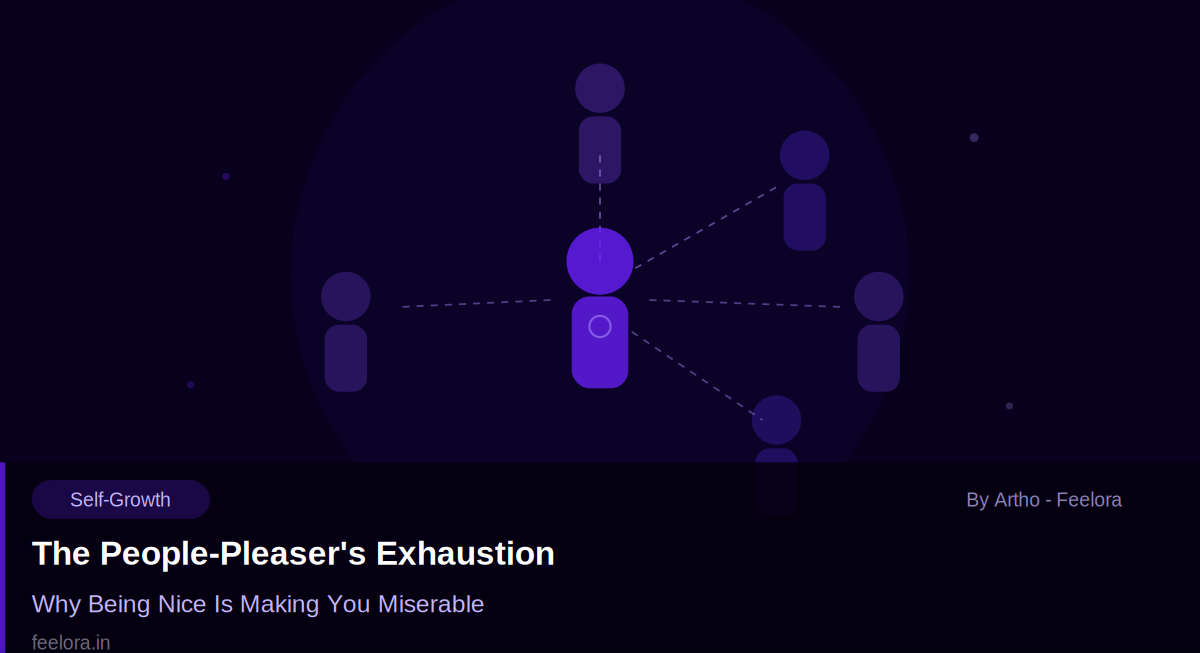
You are kind, accommodating, and everyone loves you. You are also quietly running on empty. Artho from Feelora on why people-pleasing feels like virtue — and costs like a wound.
There is a particular brand of exhaustion that comes from being good at reading people. From always knowing what someone needs before they say it. From adjusting yourself to fit whatever the moment requires. From spending so much energy making sure everyone around you is okay that there is almost nothing left for yourself.
Artho from the Feelora team works with many people who describe themselves as caring and accommodating — who are only slowly realising that what they have been doing is not generosity. It is self-erasure in a socially acceptable form.
What people-pleasing actually is
People-pleasing is not the same as being kind. Kindness comes from a place of genuine care and is offered freely. People-pleasing comes from anxiety — specifically, the anxiety that if you do not manage other people's feelings, something bad will happen. You will be rejected. Seen as difficult, selfish, or too much.
The pleasing behaviour is a preemptive strike against that outcome. It says: I will make myself whatever you need so you do not have reason to turn on me. It is a strategy. And like most anxiety-driven strategies, it works just enough to keep you using it — while costing far more than it returns.
Why it masquerades as virtue
Being called kind, easy-going, and selfless feels like praise. The problem is that the same behaviour looks like virtue from the outside and like slow disappearance from the inside. Nobody sees the calculation happening in your head before every interaction. Nobody sees how exhausting it is to have no stable version of yourself that persists across situations.
The cost nobody talks about
The most significant cost of chronic people-pleasing is the gradual loss of access to your own needs, preferences, and opinions. When you have spent years not saying what you think, not asking for what you want — you eventually start not knowing what you think or want. The self that should be there has been consistently set aside in favour of whoever needed management in the moment.
What actually helps
Recovery from people-pleasing means learning to tolerate another person's disappointment without immediately resolving it. That discomfort is the alarm that keeps the pattern going. When someone is unhappy with you and the world does not end — when they survive not being immediately accommodated — the alarm begins to lose its power.
At Feelora, Artho and the team work with people who have been giving themselves away for so long they have forgotten what they are actually like. Finding out is usually the most important work they do.
Frequently Asked Questions
Feelora Team
Contributing Author
Need Someone to Talk To?
Connect with verified listeners on Feelora for anonymous, judgment-free emotional support.
Get Started