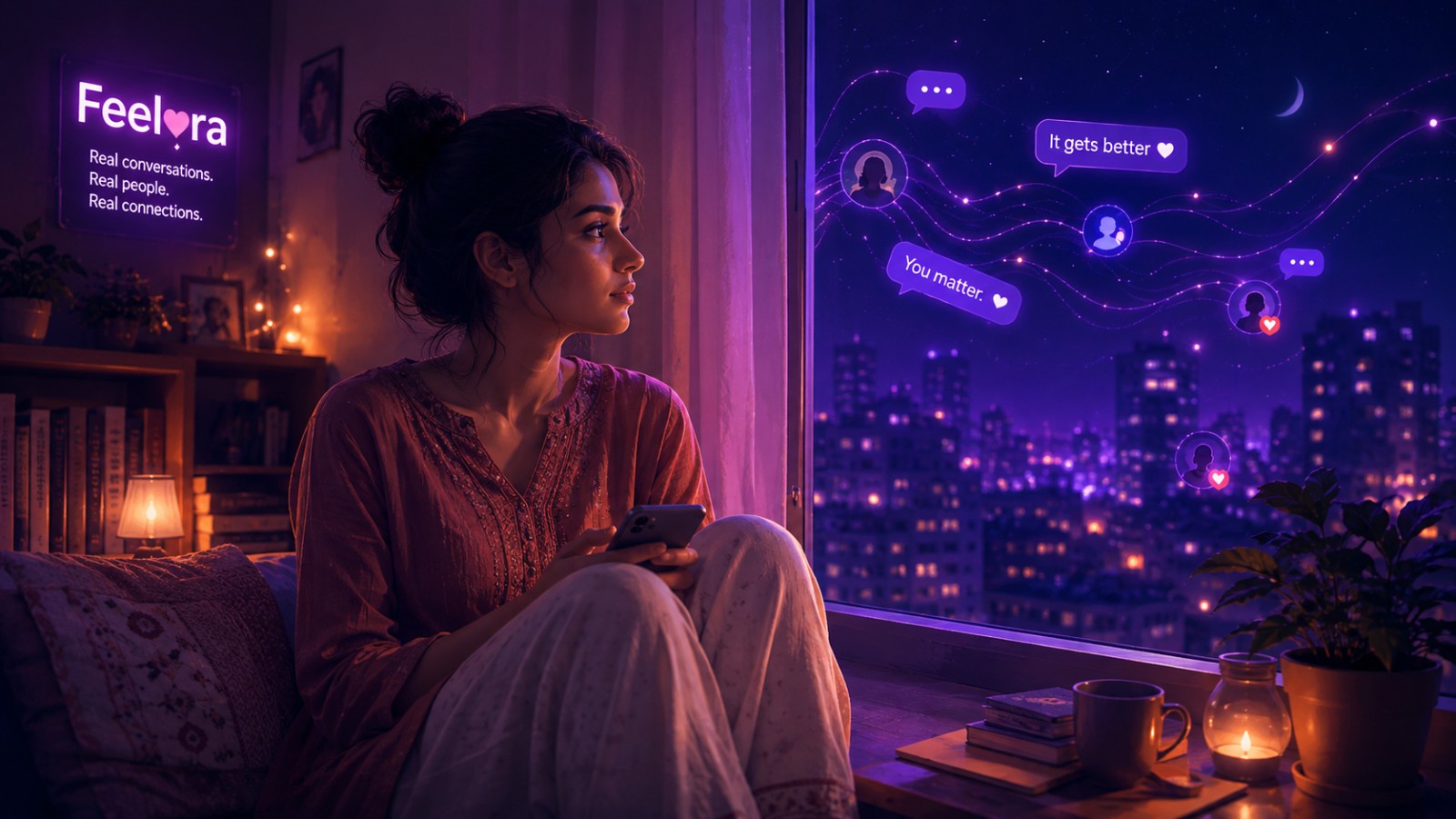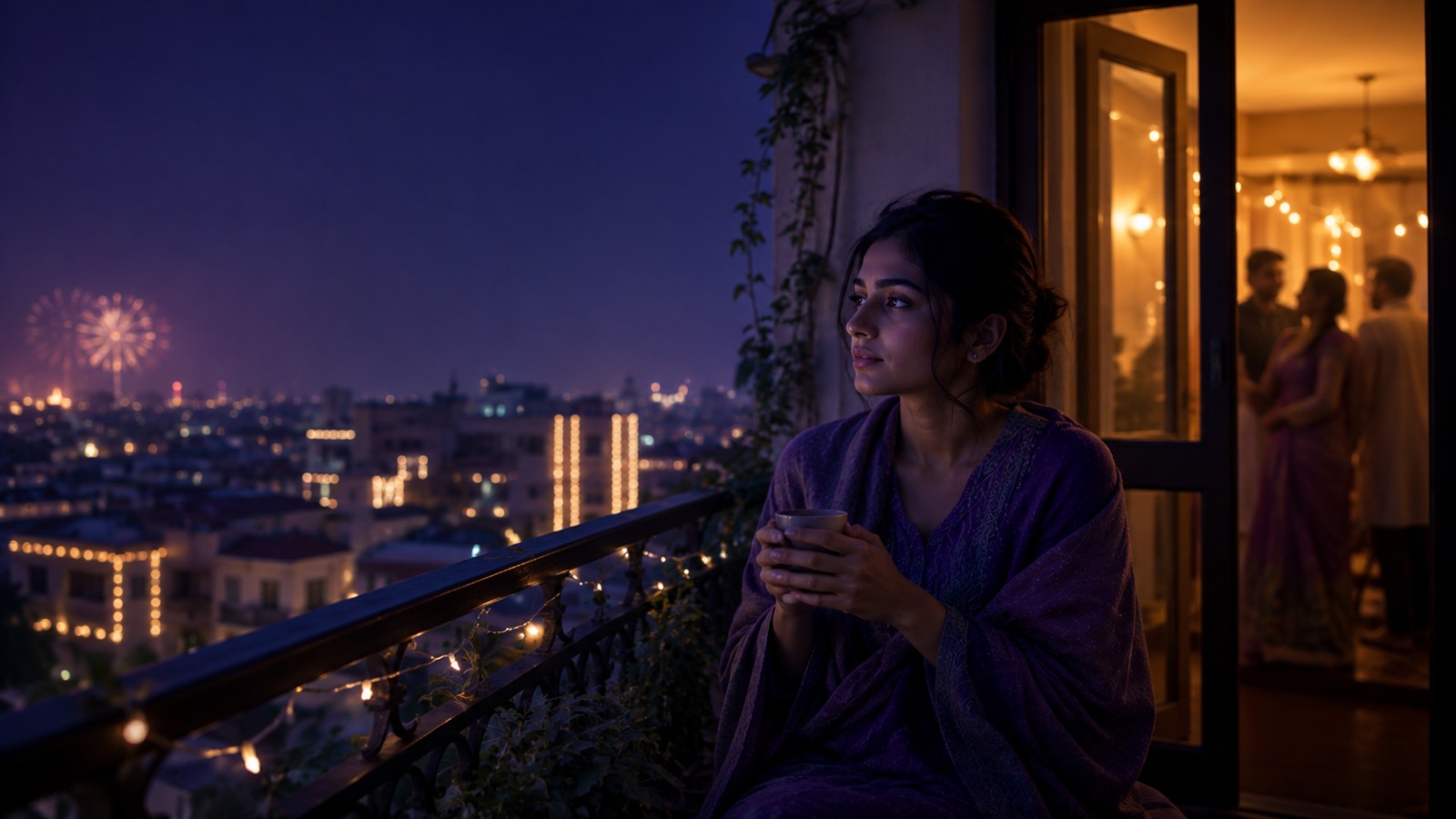
Festivals can feel lonelier than any ordinary day. Here is why festival season loneliness happens in India and what actually helps you get through it.
Quick answer: Festival season can feel lonelier than ordinary days because it puts a spotlight on exactly what's missing — family you can't reach, relationships that feel strained, or a life that doesn't match the "happy family" version everyone else seems to be posting. This is a genuinely common experience, not a personal failing, and it usually gets worse when there's no space to say it out loud. Alongside the practical steps below, having someone to actually talk to — even anonymously, like a verified listener on Feelora — can make the difference between white-knuckling your way through Diwali or Navratri and actually getting through it.
Why Festivals Can Feel Lonelier Than Ordinary Days
On paper, festival season should be the opposite of lonely. There are lights, gatherings, food, family WhatsApp groups buzzing since 6 AM. But loneliness was never really about how many people are physically around you — it's about whether anyone around you actually knows what's going on with you. Festivals turn up the contrast on that gap. Everyone else's celebration is visible — on Instagram, in the family group chat, on the street outside — while whatever you're actually feeling stays invisible, because there's rarely a natural moment during a puja or a family lunch to say "honestly, I'm not doing great."
That contrast is why festival loneliness can hit harder than an ordinary lonely evening. It's not just absence — it's absence next to everyone else's apparent abundance.
The Specific Ways Festival Season Turns Up the Volume
Festival loneliness rarely shows up as one single feeling. It's usually a mix of a few of these, depending on your situation:
| What festival season brings up | Why it stings more than usual |
|---|---|
| Living far from family — for work, college, or by choice | Every celebration reel online is a reminder of exactly where you're not |
| An unhappy or strained family situation | Festivals force proximity and performance ("just smile for the photo") even when things are tense underneath |
| Relatives asking about marriage, salary, or "settling down" | A few days of festivities can turn into a few days of low-grade interrogation |
| Grief — a first festival after losing someone | Rituals that used to include them now highlight that they're gone |
| Being single during a "couples and families" season | Weddings, mehendi posts, and family photos can make single life feel more exposed than usual |
| Financial pressure of gifts, travel, and social obligations | Money stress gets tangled up with feeling like you're failing at the festival itself |
If more than one of these is true for you at once, it makes sense that this time of year feels heavier rather than festive. That's not you being ungrateful or dramatic — it's several real stressors landing in the same two-week window.
Is It Normal to Dread Festivals Instead of Enjoying Them?
Yes. Dreading festival gatherings — or feeling relieved when they're over — is far more common than people admit out loud, precisely because it's not something you're supposed to say. Everyone performs enthusiasm because the season demands it, which creates a strange effect: it can feel like you're the only one who isn't fully looking forward to it, when in reality a lot of people around you are quietly feeling the same way and just not saying so either.
Dreading festivals doesn't mean you don't love your family, or that something is wrong with you. It usually means the season is bringing up something specific — unresolved tension, comparison, grief, or exhaustion — and that reaction deserves attention rather than guilt.
Handling "So, When Are You Getting Married?" and Other Festival Interrogations
Festivals in India have a way of turning family gatherings into informal audits — marriage, salary, weight, career choices, all up for discussion between the aarti and the food. A few things that genuinely help:
- Prepare one short, boring answer. "It'll happen when it happens" or "Still figuring that out" said calmly and without visible discomfort tends to end the conversation faster than a detailed explanation, which invites follow-up questions.
- Redirect, don't defend. Defending a choice signals it's up for debate. Redirecting ("Anyway, how's your knee doing, Chachi?") signals it isn't.
- Give yourself permission to step out. A five-minute walk, a trip to "help in the kitchen," or checking your phone on the balcony are legitimate ways to reset before going back in.
- Remember it's rarely personal. For a lot of relatives, these questions are a script they run on everyone your age — it says more about the culture of the gathering than about you specifically.
None of this makes the questions comfortable. It just makes them survivable, which is often the more realistic goal during a three-day family visit.
What Actually Helps During Festival Season
Coping with festival loneliness isn't about forcing yourself to feel festive. It's about getting through the season without pretending nothing's wrong. A few things that tend to help:
- Name the specific feeling, even just to yourself. "I'm lonely" and "I'm dreading seeing my uncle" and "I miss my mother this Diwali" are different feelings that need different responses. Vague dread is harder to sit with than a named one.
- Build in one thing that's actually yours. A call with a friend who isn't part of the family drama, a favourite sweet bought just for yourself, an hour with no obligations — something that isn't performance for anyone else.
- Lower the bar for what "a good festival" looks like. It doesn't have to be the whole event. One good hour with one person you actually enjoy counts.
- Talk to someone who isn't inside the situation. Family and close friends are often part of the exact dynamic that's making the season hard, which makes it difficult to be fully honest with them about it. Talking to someone outside that circle — a verified listener on Feelora, for instance — can give you a place to say the unfiltered version without it changing how anyone treats you afterward.
- Let the festival be imperfect. Skipping one event, leaving early, or having a quietly average Diwali isn't a failure. It's one festival season out of many, and it doesn't have to be a referendum on your whole life.
When Festival Loneliness Points to Something Deeper
Most festival loneliness is situational — it rises with the season and eases once things go back to normal. But it's worth paying attention if the low feeling doesn't lift once the festival is over, if you've lost interest in things you'd normally enjoy for weeks at a stretch, if sleep or appetite has changed noticeably, or if the sadness feels bigger than any one event could explain. That pattern is less "the season is hard" and more a sign worth discussing with a mental health professional — a doctor, psychologist, or counsellor who can properly assess it. Feelora's listeners are a good place to be heard and to say things out loud, but they aren't a substitute for that kind of professional evaluation when it's genuinely needed.
Common Questions About Festival Season Loneliness
Why do festivals make me feel lonelier than normal days?
Because they put visible celebration — family photos, gatherings, social media posts — right next to whatever's actually missing in your life, whether that's distance, tension, or grief. The contrast is what makes it sting more than an ordinary quiet day.
Is it normal to not look forward to family festival gatherings?
Yes. It's far more common than it looks from the outside — most people simply don't say it out loud because the season pressures everyone into performing enthusiasm.
What can I do if I don't have family to celebrate festivals with?
Many people build their own version of the festival — with friends, neighbours, colleagues, or community events — rather than skipping it entirely. It's also completely fine to mark the day quietly on your own terms, without needing it to look like anyone else's celebration.
How do I deal with relatives asking about marriage or career during festivals?
A short, neutral answer said without visible discomfort ("still figuring it out") usually ends the conversation faster than explaining or defending your choices, which tends to invite more questions.
Is it okay to skip a festival gathering for my mental health?
Yes. Protecting your wellbeing during a stressful gathering is a valid reason to skip or leave early — one festival isn't worth ongoing distress, and most relationships can absorb one changed plan.
Why does loneliness feel worse specifically around Diwali or Navratri?
These festivals are built around family togetherness and visible celebration more than most, so any distance, absence, or tension in your own life stands out more sharply against that backdrop.
Can talking to a stranger actually help with festival loneliness?
For many people, yes — talking to someone outside the situation, who isn't part of the family dynamic and won't remember it after the conversation ends, makes it easier to say the honest, unfiltered version of how you're feeling.
Where Feelora Fits In
Feelora is an anonymous platform where you can talk to a verified listener over chat, call, or video — without giving your name, and without any of it circling back into your family or friend group. Listeners on Feelora aren't therapists, counsellors, or doctors, and Feelora isn't a substitute for professional mental health care. What it offers is simpler: a safe, human, non-judgmental space to say the thing that's actually true this festival season, even if that thing is "I'm not okay" while everyone around you is celebrating.
If this festival season feels heavier than it looks from the outside, you don't have to carry it alone. Download Feelora and talk to a verified listener, anytime you need to.
Frequently Asked Questions
Feelora Team
Contributing Author
Need Someone to Talk To?
Connect with verified listeners on Feelora for anonymous, judgment-free emotional support.
Get Started