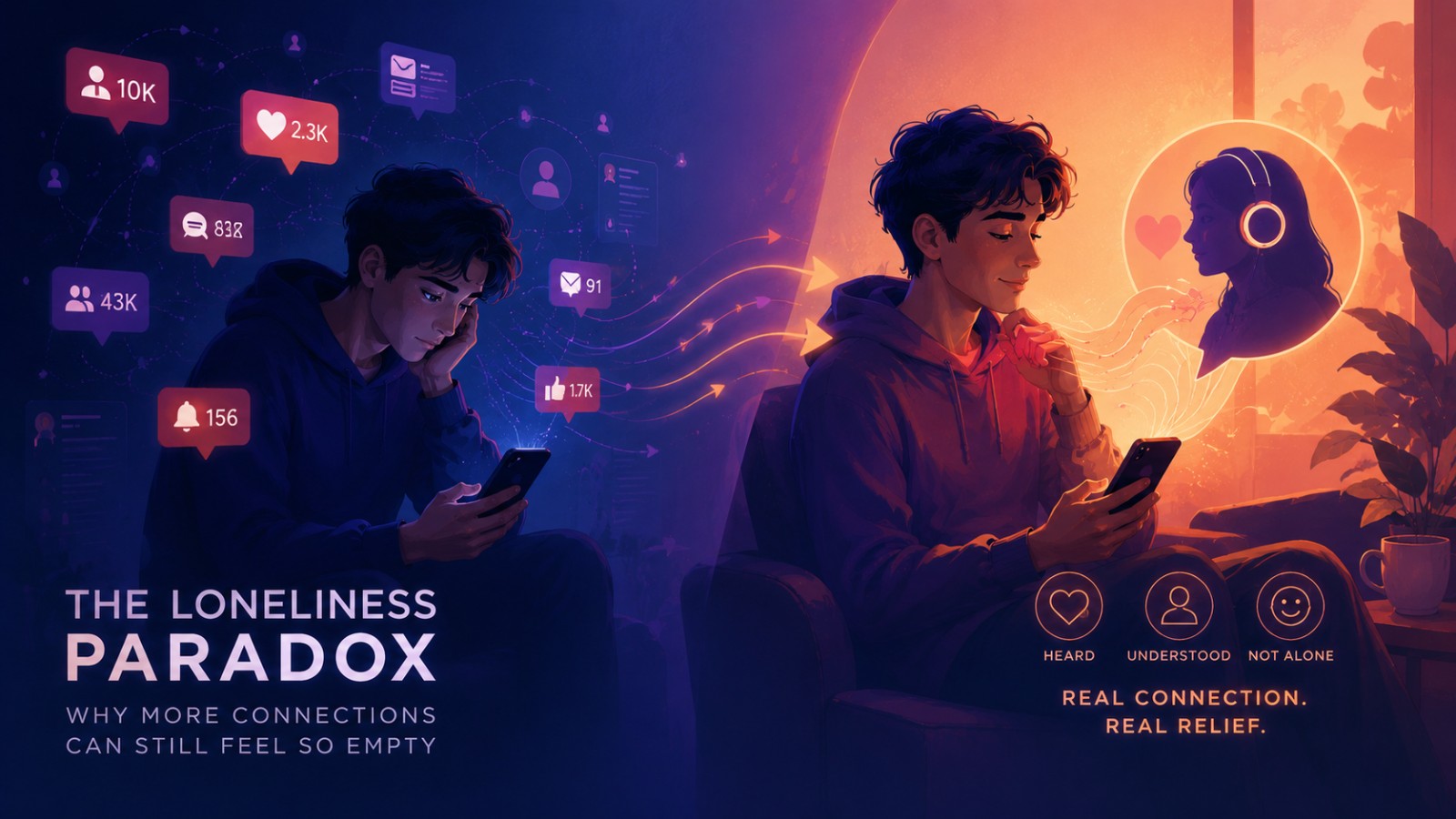
You have thousands of social media connections but feel deeply alone. Discover why modern connection is broken.
The Paradox
You've never been more connected, yet more isolated. We're more connected than ever, yet have fewer people we can truly talk to. This is the loneliness paradox.
The solution isn't to abandon social media—it's to create space for real, judgment-free, present-moment connection with another human being.
Why Likes Don't Equal Listening
Social media was supposed to bring us closer. A like, a comment, a retweet—these feel like connection. But they're not.
Connection happens in the pauses. In the moments where someone genuinely listens without planning their response. Where they ask questions because they're curious, not because they're waiting for their turn to speak.
A thousand likes from strangers can never replace one person who truly hears you.
The Loneliness Epidemic
The statistics are sobering. Studies show that loneliness has reached epidemic proportions in developed countries. Despite being more digitally connected than ever, more people report feeling lonely than at any point in recent history.
The problem isn't the technology. It's that we're using it as a substitute for the kind of connection that requires presence, vulnerability, and time.
Three Reasons You Feel Lonely
1. Surface-Level Connections
Your social media feed shows carefully curated highlights. The birthday wishes from hundreds of people who don't know your real struggles. The congratulations on your promotion from people you haven't spoken to in years. These are positive, but they're not deep. They don't nourish the part of us that needs to be truly seen.
2. The Comparison Trap
Scrolling through others' highlight reels makes your own life feel inadequate. Everyone else seems happier, more successful, more connected. So you isolate further—convinced that your struggles are unique and shameful. This drives loneliness deeper.
3. Missing Presence
Even when we're with people, we're often not really there. Phones on the table. Minds elsewhere. We're together but not present. And that's lonelier than being alone.
Why This Matters Now
The pandemic accelerated our shift toward digital connection. But what started as a necessity became a habit. Many of us realize now that we've lost the skills and confidence for face-to-face vulnerability.
Rebuilding connection isn't about disconnecting from technology. It's about being intentional about where we invest our emotional energy.
The Path Forward
Real connection requires these three things:
Presence: Showing up fully, not as a highlight, but as a whole person—flaws included.
Listening: Actually hearing what someone is saying beneath their words. Asking questions because you care, not because it's your turn to talk.
Consistency: Friendships, real ones, require time and repetition. The same person, again and again.
This is what Feelora was built for. A space where you can be heard without judgment. Where someone takes the time to truly listen. Where presence matters more than performance.
Frequently Asked Questions
Q1: Is it normal to feel lonely even with thousands of social media friends?
Absolutely. This is one of the most common experiences people report. Having many social media connections doesn't necessarily mean you have meaningful relationships where you feel truly heard and valued. Real connection requires depth and presence, not just quantity.
Q2: How can I tell if my relationships are deep enough?
Ask yourself: Can I be vulnerable with this person? Do they remember the personal things I've shared? When I'm struggling, is this someone I'd actually reach out to? Do I feel energized or drained after talking to them? Deep relationships are where you can be yourself without filtering.
Q3: Can online conversations ever be as meaningful as in-person ones?
They can be deeply meaningful, but they're different. Video calls with someone you trust can create real connection. Text-based conversations can too. But the lack of physical presence does change the dynamic. Both have value—the key is intentionality about what you're looking for.
Q4: What if I don't know how to open up to people?
This is incredibly common, especially for those who've felt unseen for a long time. It often helps to start small—share something slightly vulnerable with someone you trust a little. Notice how they respond. Safe people will make space for your honesty. With practice, opening up becomes easier.
Q5: How can I find people who truly listen?
Look for people who ask follow-up questions. Who remember details about your life. Who make eye contact and put their phones away. Who share their own vulnerabilities—not to compete, but to create mutual honesty. These are the people worth investing in. Quality over quantity, always.
The loneliness you feel isn't a character flaw. It's a signal that something important is missing—genuine human connection. And that's something you deserve.
Feelora Insights Team
Contributing Author
Need Someone to Talk To?
Connect with verified listeners on Feelora for anonymous, judgment-free emotional support.
Get Started