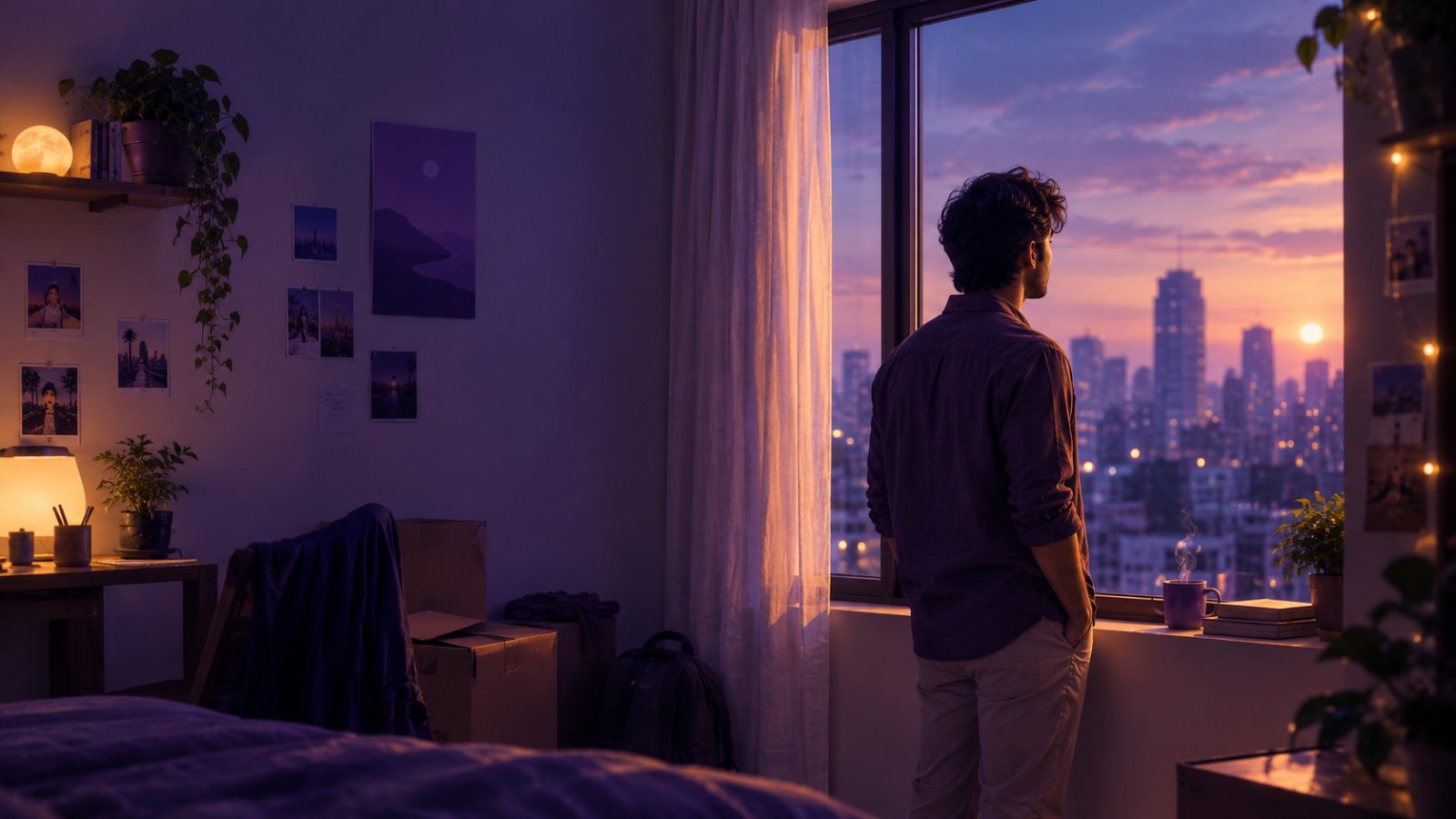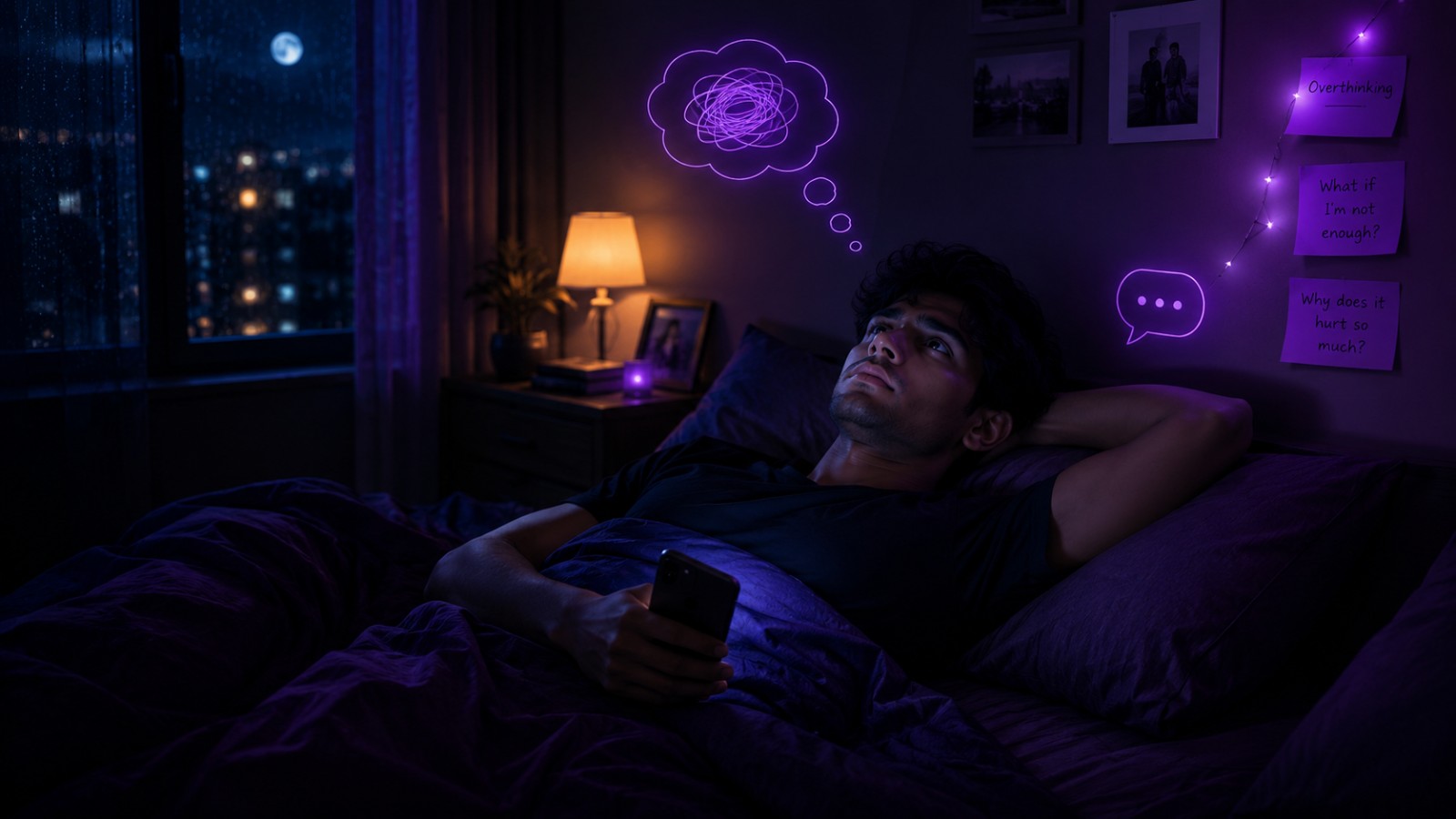
Feeling lonely at 2 AM even when you're not physically alone? Here's why nighttime loneliness hits so hard in India, why it's more common than you think, and what actually helps in the moment.
It's 2:14 AM and your body is exhausted but your brain absolutely refuses to switch off. The house is quiet, everyone else is asleep, and suddenly you're the only person awake in the world — replaying a conversation from three years ago, worrying about a text you haven't sent, or just sitting with a heavy, hollow feeling you can't quite name. If this sounds familiar, you're not broken and you're not "too sensitive." You're experiencing nighttime loneliness, and in India in 2026 — where joint families, packed schedules, and "log kya kahenge" culture leave very little room to actually talk about feelings — it's one of the most common, least-discussed struggles there is.
This isn't really about being physically alone. Plenty of people who feel this ache at night are married, live with parents, or share a room with three roommates. Nighttime loneliness is an emotional state, not a headcount problem — and understanding why it hits so hard after dark is the first step to actually feeling better.
Why Loneliness Gets So Much Worse at Night
During the day, you're distracted. College, work, family responsibilities, traffic, deadlines, group chats — your brain has a hundred things competing for its attention, so uncomfortable emotions get pushed to the back of the queue. At night, all of that noise disappears. There's no meeting to prep for, no sibling asking for help with homework, no boss pinging you on WhatsApp. Just you, the ceiling fan, and your own thoughts.
Psychologically, this is sometimes called the "spillover effect" — when external distractions fade, suppressed emotions from the entire day surface all at once. Add to that the fact that cortisol (your stress hormone) naturally dips at night while melatonin rises, which can make you more emotionally reactive and prone to rumination right when you're trying to sleep. It's a cruel design: your mind is most active and most anxious exactly when your body wants rest the most.
Why This Feeling Is So Common Among Indians Specifically
India is often called a collectivist culture, and in many ways that's a genuine strength — you're rarely without people around you. But being surrounded by people is not the same as being known by them. Many of us grow up in homes where emotional check-ins are rare, where "how are you feeling" is replaced by "khana kha liya," and where admitting you're struggling can feel like you're being dramatic, ungrateful, or "attention-seeking."
Add to this a few very 2026 realities: young professionals moving to metro cities away from family for work, students living in PG accommodations far from home, people in arranged-marriage households who haven't yet built emotional intimacy with a spouse, and an entire generation raised to prioritise academic or career "success" over emotional literacy. The result is a country full of people who are rarely physically alone, yet quietly starved of a space where they can say "I'm not okay" without being judged, fixed, or lectured.
The Difference Between Being Alone and Feeling Lonely
It helps to separate solitude from loneliness. Solitude is a choice — time alone that recharges you. Loneliness is the painful gap between the connection you have and the connection you actually need. You can feel deeply lonely at a family function surrounded by forty relatives, and you can feel completely at peace alone in your room. What matters isn't how many people are around you — it's whether you feel safe enough to be honest with any of them.
This is why nighttime loneliness often hits hardest for people who seem, from the outside, to have full lives: the topper who can't tell their parents they're anxious about placements, the new mother surrounded by relatives but with no one to admit she's overwhelmed, the techie living with three flatmates who still eats dinner scrolling Instagram alone. Loneliness doesn't care how full your house or your calendar is.
What Actually Helps in the Moment
When the 2 AM spiral starts, a few small shifts can genuinely help before things get worse.
Name it without judging it. Simply thinking or saying "I'm feeling lonely right now" — instead of "something is wrong with me" — takes the emotion out of the danger zone and into something you can actually deal with.
Get out of your head and onto paper. Rumination loops because thoughts feel urgent when they're just circling in your mind. Writing even three lines in a notes app — what happened today, what you're feeling, what you need — interrupts the loop.
Avoid doomscrolling as a substitute for connection. Scrolling Instagram or Reddit at 2 AM feels like connection but usually deepens the loneliness, since you're consuming other people's highlight reels while alone with your actual feelings.
Talk to someone — even if it's not someone you know. This is often the hardest part in Indian households, where the people physically closest to you (parents, siblings, a spouse) may not be the people you feel safe opening up to, especially at 2 AM. That's where talking to an anonymous, judgment-free listener can make a real difference — not to replace real relationships, but to give your feelings somewhere to go right now, in the moment, without waiting for "the right time" to bring it up with family.
Building Real Fixes, Not Just Late-Night Band-Aids
Getting through one lonely night is important, but the deeper fix is building a life with more genuine emotional contact in it — during the day, not just when you're falling apart at midnight. That can look like scheduling a weekly call with one friend you can actually be honest with, joining a hobby group or community where conversation isn't just small talk, or simply telling one trusted person, "I've been feeling low at night lately," so you're not carrying it silently.
It also means slowly getting more comfortable being emotionally honest with the people already in your life — even if the culture around you hasn't modelled that for you. That's a skill, not a personality trait, and like any skill it gets easier with practice, ideally practiced first in a low-stakes, judgment-free space.
You Don't Have to Wait Until Morning
Nighttime loneliness convinces you that no one is available, that you have to just push through until sunrise. That's not true. Feelora exists exactly for this moment — the 1 AM ache, the 3 AM overthinking spiral, the feeling of being surrounded by people all day and still going to bed feeling unseen. You can talk anonymously, in Hindi, English, or Hinglish, to a real listener who's actually awake and actually listening, with no judgment, no family connection, and no risk of it getting back to anyone you know. Sometimes the fastest way out of a lonely night is simply being heard by one person who's paying attention — and that can happen in minutes, not months.
Frequently Asked Questions
Feelora Team
Contributing Author
Need Someone to Talk To?
Connect with verified listeners on Feelora for anonymous, judgment-free emotional support.
Get StartedRelated Posts

Retired and Suddenly Feel Invisible? Coping With Loneliness After Retirement (India Edition)

Lost Your Job and Ashamed to Tell Anyone? Here's What Actually Helps (India Edition)