
Postpartum loneliness is one of the least talked-about parts of new parenthood in India. Here's why it happens even with family around, how it differs from postpartum depression, and what actually helps.
Quick answer: Postpartum loneliness is the isolation many new parents feel after having a baby — even when surrounded by family — because their old routine, identity, and social life have changed overnight while the people around them assume they're simply "busy and happy." It's extremely common, especially in the first few months, and it's different from postpartum depression, though the two can overlap. What helps most is naming the loneliness honestly instead of hiding it behind "we're fine," rebuilding small pieces of adult connection into the day, and having at least one space — a partner, a friend, or an anonymous listener on a platform like Feelora — where you can say the unfiltered parts out loud without being told to just enjoy every moment.
Why New Parents Feel So Lonely, Even With Family Around
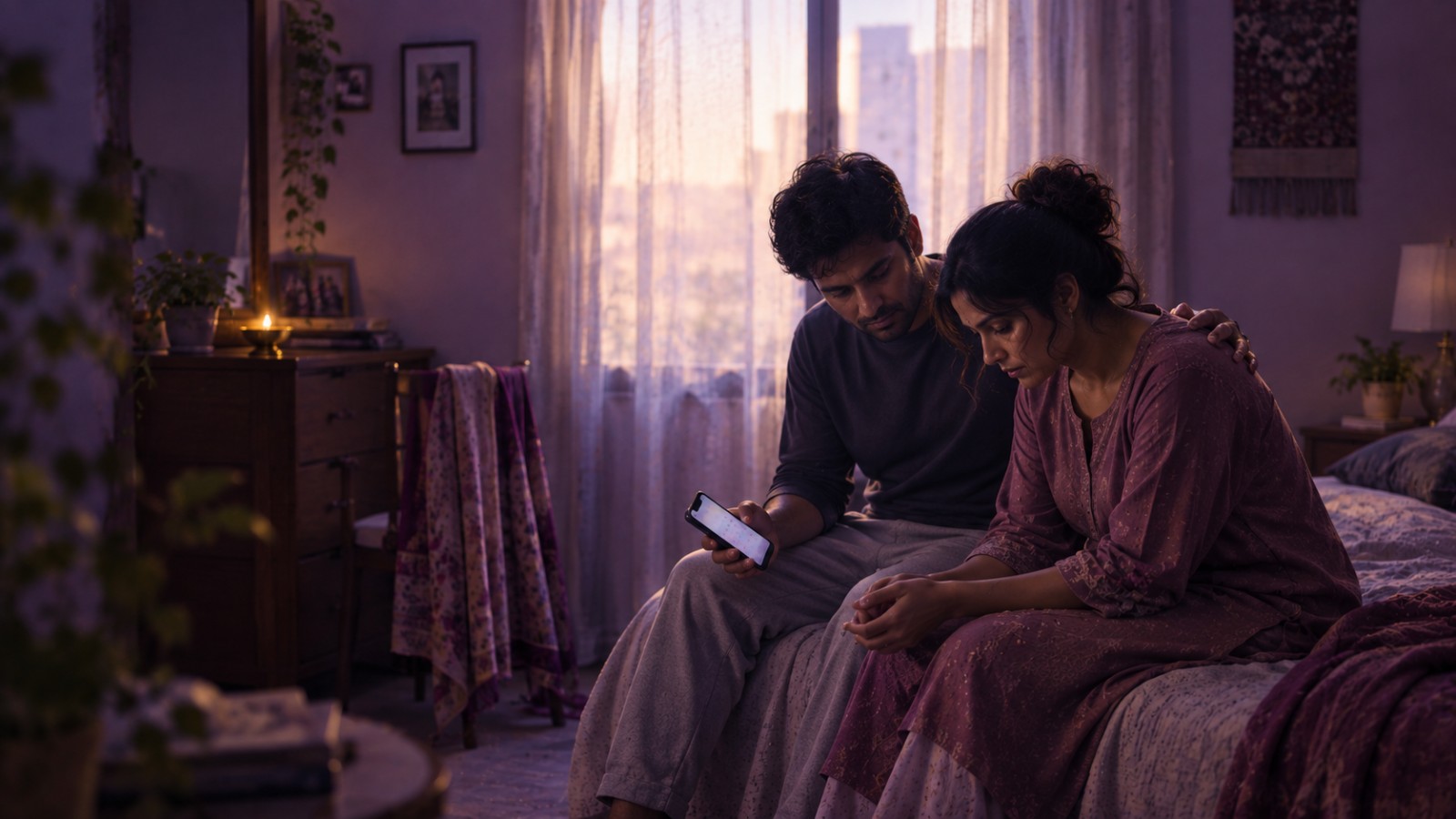
It sounds contradictory — a house full of relatives helping with the baby, and yet a new parent feels more alone than ever. But loneliness isn't only about how many people are physically in the room. It's about whether anyone is actually asking how you are, not just how the baby is.
In many Indian households, the weeks after childbirth are full of well-meaning help: grandparents managing the baby, relatives dropping by, advice arriving from every direction. What often goes missing in all of that activity is a conversation that isn't about feeding schedules or the baby's weight — one where someone checks in on the parent as a person, not just as a caregiver.
Is It Normal to Feel Lonely After Having a Baby?
Yes, and it's far more common than most new parents expect. Postpartum loneliness can affect anyone — first-time parents, experienced parents, mothers and fathers alike — and it isn't a reflection of how much you love your baby. It often comes from a sudden, total shift in routine: old friendships get harder to maintain, work colleagues fade into the background, and even a partner can feel like a stranger when both of you are running on broken sleep.
Many new parents also describe a strange kind of loneliness that comes from being constantly touched, needed, and watched by a baby, while still feeling emotionally unseen by the adults around them. Physical closeness and emotional connection are not the same thing, and it's possible to feel both overwhelmed by contact and starved of real conversation at once.
Postpartum Loneliness vs. Postpartum Depression: What's the Difference?
| Postpartum loneliness | Postpartum depression |
|---|---|
| Feeling isolated, understimulated, or disconnected from adult life | Persistent low mood, hopelessness, or numbness that doesn't lift |
| Usually eases with real conversation, company, or a change in routine | Often doesn't improve with company alone and can worsen over time |
| Doesn't usually affect bonding with the baby | Can involve difficulty bonding, intrusive thoughts, or loss of interest in the baby |
| A situational, common experience | A recognised mental health condition that benefits from professional support |
The two can exist together, and loneliness left unaddressed can make depression more likely. If you're not sure which you're dealing with, it's always reasonable to speak to a doctor or mental health professional — this article can't diagnose either one, only describe the general difference.
Why This Is Rarely Talked About Openly in India
- New parenthood is framed as purely joyful. Saying "I feel lonely" can feel like an admission that something is wrong with you, not the situation.
- Help is often about logistics, not emotional company. Relatives managing chores and childcare is genuinely valuable, but it isn't the same as someone asking "how are you holding up, really?"
- Fathers' loneliness is rarely acknowledged at all. The assumption that only mothers struggle emotionally after a baby leaves many fathers with nowhere to say they're overwhelmed too.
- Mental load falls unevenly. One parent often carries most of the invisible planning and worry, deepening the sense of isolation even inside a shared home.
What Actually Helps With Postpartum Loneliness
1. Say the honest version, at least to one person
"We're managing" is often the polite answer to "how are you?" Saying the truer version — "honestly, it's harder than I expected, and I feel really alone some days" — to even one trusted person can be the first real relief in weeks.
2. Separate practical help from emotional company
It's possible to have plenty of hands-on help and still feel lonely, because help with tasks doesn't automatically include being asked how you're coping emotionally. It's fair to ask directly for both — practical support and a proper conversation — rather than assuming one covers the other.
3. Rebuild tiny pieces of your pre-baby identity
A five-minute phone call with an old friend, ten minutes with a book, a short walk alone — these aren't indulgent, they're small anchors to the person you were before the baby, and they matter for how connected you feel to yourself, not just others.
4. Let your partner know it's not a competition of who's more tired
Many couples unintentionally isolate each other after a baby by silently comparing exhaustion instead of checking in. A short, regular "how are you actually doing" between partners — not just about the baby — can prevent a lot of quiet distance from building up.
5. Find one space where you don't have to perform happiness
New parents are often expected to look joyful in front of family, especially when everyone worked hard to help with the pregnancy and birth. Having somewhere separate from that — a friend, a support group, or an anonymous listener — to say the unfiltered version without managing anyone else's expectations can make a real difference.
When to Seek Professional Support
Postpartum loneliness on its own doesn't need clinical treatment — it usually eases with genuine connection and time. But it's important to speak to a doctor or mental health professional if you notice persistent low mood, difficulty bonding with the baby, intrusive or frightening thoughts, or a loss of interest in things that used to matter, especially if these last more than two weeks. These can be signs of postpartum depression or anxiety, which are medical conditions that respond well to proper care.
Talking to someone like a verified listener on Feelora can be a good space to simply be heard in the meantime, but it is not a substitute for medical or psychiatric care when those signs are present.
You're Not the Only One Who Feels This Way
Postpartum loneliness is one of the least talked-about parts of having a baby, mostly because it doesn't fit the picture everyone expects new parents to present. If you've been quietly struggling behind "we're doing great," it might help to say the real version out loud to someone, just once. If there's no one in your life right now who feels safe for that conversation, Feelora is there for exactly this: a private, judgment-free space to talk to a real person who's simply there to listen.
Frequently Asked Questions
Feelora Team
Contributing Author
Need Someone to Talk To?
Connect with verified listeners on Feelora for anonymous, judgment-free emotional support.
Get StartedRelated Posts
Trying to Conceive and Feeling Completely Alone? Understanding Infertility Loneliness (India Edition)

Child Moved Out or Abroad? How to Cope With Empty Nest Syndrome (India Edition)
