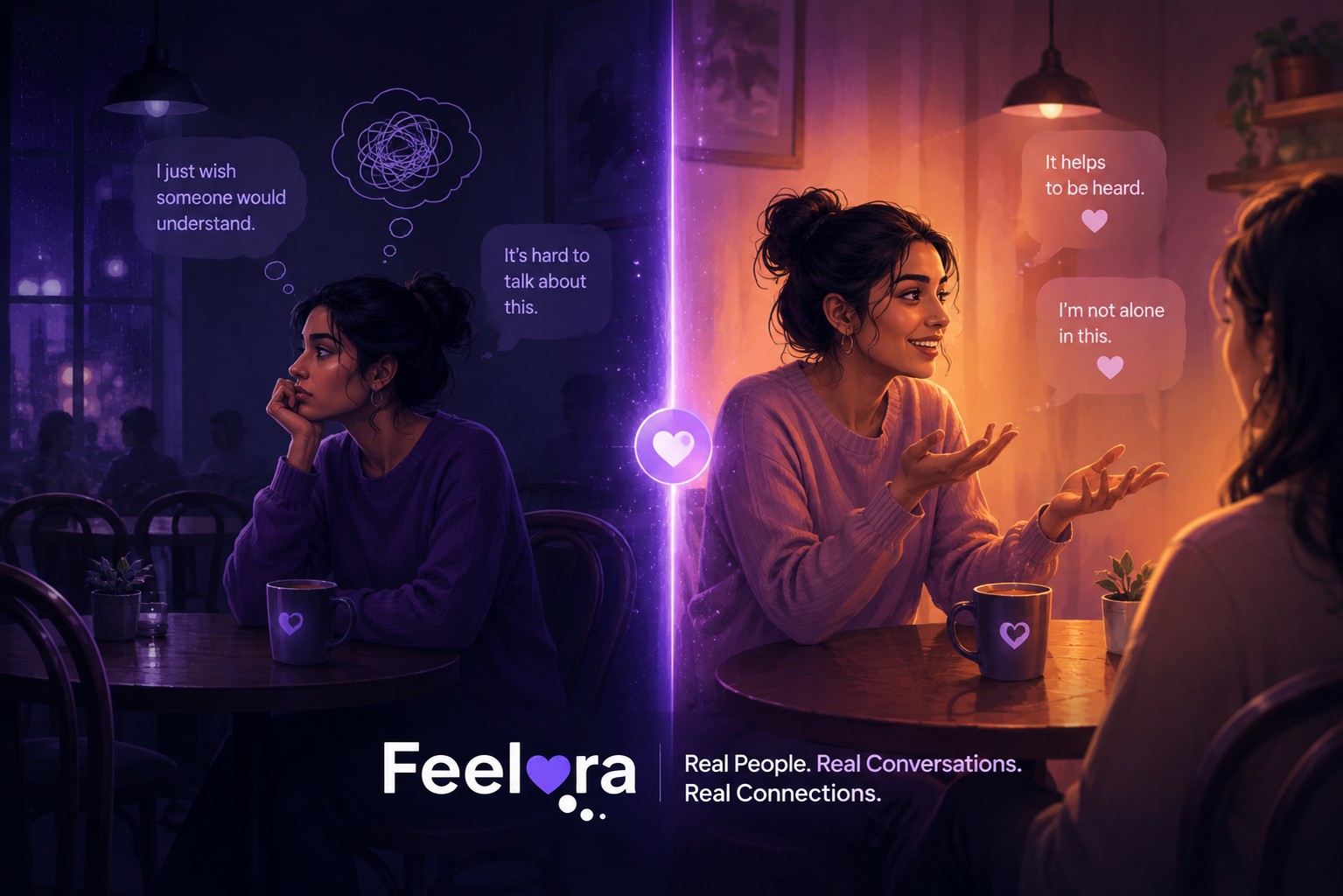
Divorce in India still carries stigma most people underestimate. Here's why the loneliness feels different, and where to talk about it.
Divorce rates in India remain low compared to much of the world, and that statistic, which sounds almost reassuring on paper, is actually part of the problem. When something is genuinely rare in the people around you, going through it can feel less like a hard life event and more like stepping outside a script everyone else is still following — weddings on the group chat, "how's married life" as small talk, family functions built around couples. The loneliness of divorce in India isn't just about losing a partner. It's about losing a script, in a culture where very few people around you have had to write a new one.
Why This Hits Differently Here
Marriage in many Indian families isn't treated as a private decision between two people — it's a family and community event from the start, which means its ending gets treated the same way. Divorce is often still discussed in terms of family honour, particularly for women, and can come with real social consequences: being quietly left off invitations, extended family treating the topic as something to whisper about rather than ask about directly, or well-meaning relatives offering unsolicited advice about reconciliation long after the decision has been made. None of this is universal — attitudes are shifting, especially in urban India — but it's common enough that most people going through a divorce here are managing at least some version of it.
The Specific Loneliness Nobody Prepares You For
Being surrounded by married friends who don't quite know what to say. Many friendships built around couple activities — dinners, trips, weekend plans — quietly restructure themselves after a divorce, sometimes without any conscious decision from anyone. It's rarely deliberate exclusion. It's more that the social pattern that included you assumed a partner, and nobody's quite sure how to adjust it.
Family conversations that circle the topic instead of addressing it. A lot of people describe a strange dynamic where their own divorce becomes something everyone in the extended family knows about, references indirectly, and never actually discusses directly with them — leaving them to process something enormous almost entirely without acknowledgment from the people closest to them.
The specific exhaustion of managing other people's reactions. Announcing a divorce often means bracing for a range of responses — sympathy that feels performative, judgment thinly disguised as concern, or advice about "trying again" — on top of everything you're already processing personally. Many people describe eventually just stopping telling people, not because they're ashamed, but because managing the reaction has become its own tiring task.
What Actually Helps During This Period
Finding at least one space with zero social consequence attached to what you say. Not every conversation about a divorce needs to happen with people who are also connected to your family, your ex, or your community. A private conversation with someone entirely outside that network removes the layer of managing reputation or reaction.
Separating the legal and logistical process from the emotional one. Divorce involves a lot of practical, administrative weight — documentation, custody arrangements, financial division — which can end up crowding out space to actually process the emotional side. Both matter, but they need different kinds of support, and it helps to acknowledge that the emotional processing deserves its own attention, not just leftover time.
Allowing contradictory feelings without needing to resolve them quickly. Relief and grief showing up in the same week — sometimes the same day — is extremely common after a divorce, even when the decision was clearly the right one. This isn't confusion; it's a normal, layered response to a major life change.
Where an Anonymous, Judgment-Free Listener Fits
Feelora offers exactly the kind of space that's often missing during this period — a private conversation with a verified listener who has no connection to your family, your ex, or your community, and therefore nothing to protect by softening the truth or steering the conversation toward reconciliation advice. You can say the version of the story that doesn't need managing for anyone else's comfort, as many times as you need to, without it becoming something that circulates further.
A Note on Safety
Divorce sometimes follows a relationship involving abuse or ongoing conflict that extends past separation. If you are in an unsafe situation, or facing threats or harassment from a partner or ex-partner, please prioritise contacting local authorities or a domestic violence support organisation over any listening app — Feelora is built for emotional support, not crisis intervention or legal protection.
This Gets Easier, Even If It Doesn't Feel Like It Yet
Social stigma around divorce in India is genuinely shifting, particularly in urban areas, as more people speak openly about their experiences. That shift doesn't erase what the process feels like right now, but it's worth knowing that the isolation many people feel in the first year or two of a divorce tends to ease — both because social circles adjust, and because new, unrelated friendships and support systems get built over time.
Divorce rates in India remain low compared to much of the world, and that statistic sounds reassuring on paper, but is actually part of the problem. When something is genuinely rare in the people around you, going through it feels less like a hard life event and more like stepping outside a script everyone else is still following. The loneliness of divorce in India isn't just about losing a partner—it's about losing a script in a culture where very few people around you have had to write a new one.
Why This Hits Differently Here
Marriage in many Indian families isn't treated as a private decision between two people—it's a family and community event from the start, which means its ending gets treated the same way. Divorce is often still discussed in terms of family honour, particularly for women, and can come with real social consequences. None of this is universal—attitudes are shifting, especially in urban India—but it's common enough that most people going through divorce here are managing at least some version of it.
The Specific Loneliness Nobody Prepares You For
Being surrounded by married friends who don't quite know what to say. Many friendships built around couple activities quietly restructure themselves after divorce, sometimes without conscious decision from anyone. The social pattern that included you assumed a partner, and nobody's quite sure how to adjust it.
Family conversations that circle the topic instead of addressing it. Many people describe a strange dynamic where their own divorce becomes something everyone in the extended family knows about, references indirectly, and never actually discusses directly with them.
The specific exhaustion of managing other people's reactions. Announcing divorce often means bracing for responses—sympathy that feels performative, judgment disguised as concern, or advice about "trying again"—on top of everything you're already processing personally.
What Actually Helps
Finding a space with zero social consequence attached to what you say. A private conversation with someone entirely outside your network removes the layer of managing reputation or reaction.
Separating the legal and logistical process from the emotional one. Both matter, but they need different kinds of support. The emotional processing deserves its own attention.
Allowing contradictory feelings without needing to resolve them quickly. Relief and grief showing up in the same week is extremely common after divorce, even when the decision was clearly the right one.
Where Feelora Fits
Feelora offers exactly the kind of space that's often missing during this period—a private conversation with a verified listener who has no connection to your family, ex, or community. You can say the version of the story that doesn't need managing for anyone else's comfort.
A Note on Safety
If you are in an unsafe situation or facing threats from a partner or ex-partner, please contact local authorities or a domestic violence support organisation—Feelora is built for emotional support, not crisis intervention.
This Gets Easier
Social stigma around divorce in India is shifting, particularly in urban areas. The isolation many people feel in the first year or two of divorce tends to ease as social circles adjust and new support systems are built over time. Download Feelora and talk to a verified listener today.
Frequently Asked Questions
Feelora Team
Contributing Author
Need Someone to Talk To?
Connect with verified listeners on Feelora for anonymous, judgment-free emotional support.
Get StartedRelated Posts

Retired and Suddenly Feel Invisible? Coping With Loneliness After Retirement (India Edition)

Lost Your Job and Ashamed to Tell Anyone? Here's What Actually Helps (India Edition)